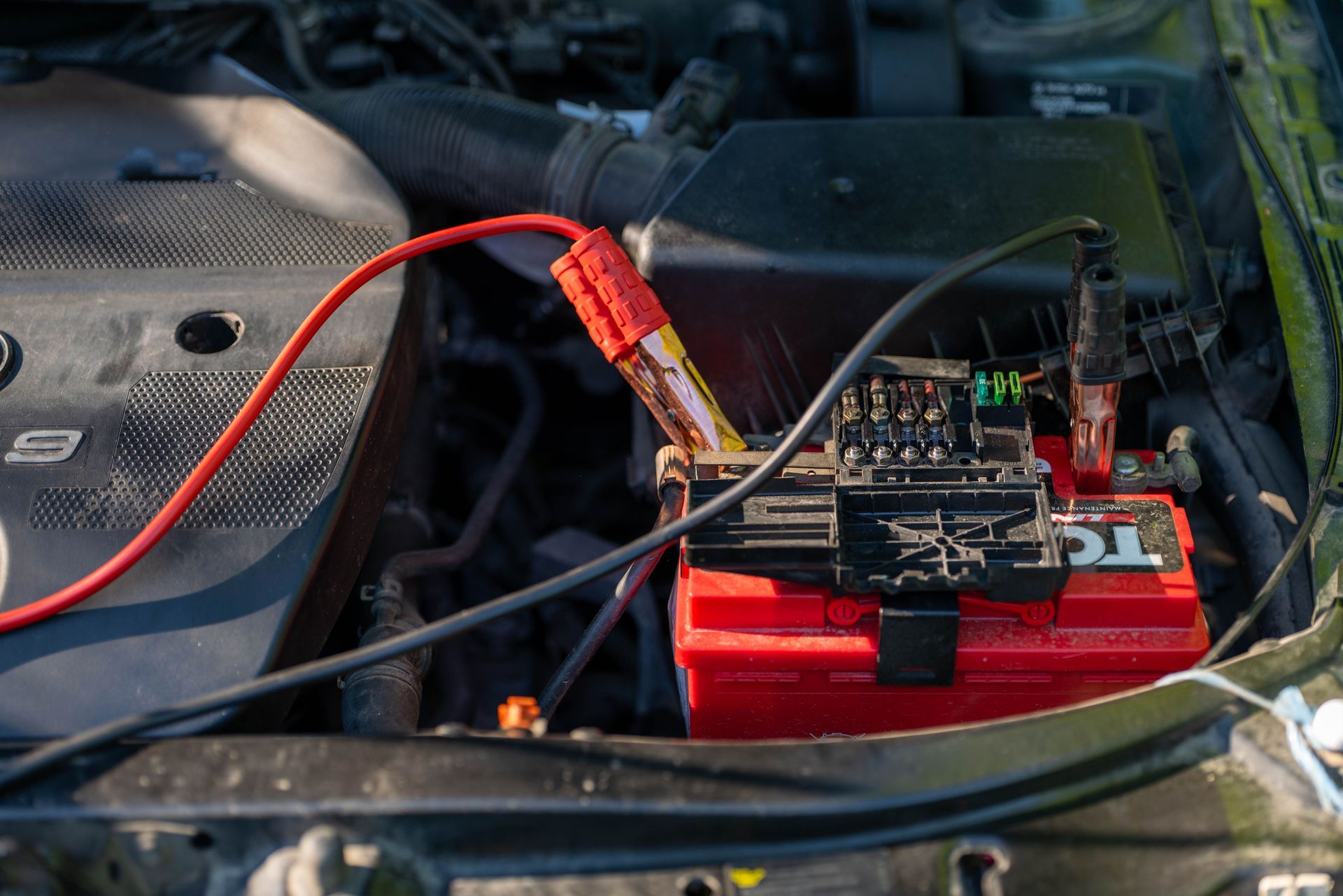
Why Do Mechanics Charge Diagnostic Fees? | Sarasota, FL
A check engine light tells you something is wrong. Finding out why takes knowledge, testing, and the right equipment.
Why Do Auto Repair Shops Charge Diagnostic Fees? What Sarasota Drivers Should Know
Your check engine light comes on. Your car starts making an unusual noise. Maybe your air conditioning stops cooling, or your vehicle suddenly refuses to start.
You bring it to an auto repair shop expecting answers.
Then comes a question many drivers ask:
“Why do I have to pay a diagnostic fee just to find out what's wrong?”
It's a reasonable question, especially when you're already concerned about the cost of repairs.
At Car Tune Up Sarasota, we believe customers deserve to understand what they're paying for before authorizing any work.
The answer is simple: professional diagnostics involve much more than plugging a computer into your vehicle.
What Is an Automotive Diagnostic Fee?
An automotive diagnostic fee covers the professional time, technical knowledge, equipment, and testing needed to investigate a vehicle problem.
Modern vehicles contain interconnected electrical, mechanical, and computer-controlled systems. An issue in one component can create symptoms in another.
For example, a check engine light could be caused by:
- A failing sensor
- Damaged wiring or a poor electrical connection
- An engine misfire
- A fuel delivery problem
- An intake or vacuum leak
- An emissions system malfunction
- A computer communication issue
Several different problems can produce the same diagnostic trouble code.
That's why identifying a code is only the beginning.
The goal of professional diagnostics is to determine what's actually causing the problem, rather than replacing parts based on a guess.
Why Isn't a Free Code Scan Enough?
Many auto parts stores offer free check engine light code scans.
These scans can be useful. They provide a starting point by identifying diagnostic trouble codes stored in the vehicle's computer.
But a trouble code does not necessarily identify a failed part.
Consider a common example.
Your vehicle displays a code indicating that the engine is running too lean.
Possible causes include an intake air leak, incorrect fuel pressure, an exhaust leak, inaccurate sensor readings, or a fuel delivery problem.
Replacing an oxygen sensor simply because a code relates to the air-fuel system may not fix anything.
A professional technician must interpret the code, examine live operating data, and perform appropriate tests to identify the cause.
A code scan tells us where to begin looking. Diagnostic testing helps us determine what needs to be repaired.
What Happens During a Professional Vehicle Diagnosis?
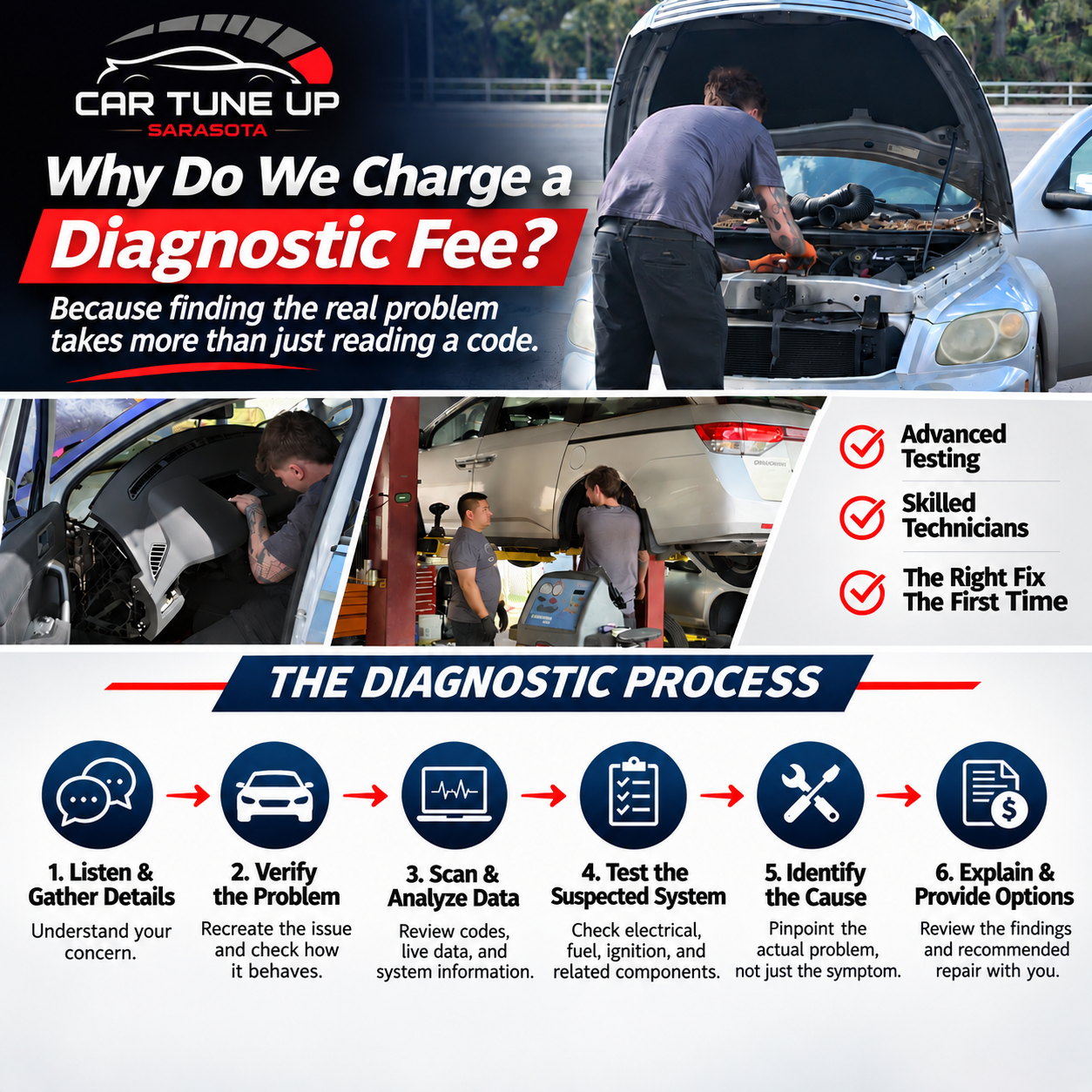
When your vehicle arrives at Car Tune Up Sarasota, our diagnostic process is designed to move from understanding the symptom to identifying the underlying cause.
Not every vehicle requires every test. The steps depend on the problem and the results of earlier testing.
Step 1: We Listen to Your Concerns
The diagnostic process begins before a technician connects any equipment.
We want to understand what you're experiencing.
Does the problem happen when the engine is cold? Does the vehicle hesitate during acceleration? Does the warning light come on intermittently? Did the problem begin after another repair?
These details help narrow the possible causes and guide the investigation.
Step 2: We Verify the Problem
Whenever practical and safe, our technician attempts to reproduce or verify the reported concern.
This may involve a road test, checking system operation, listening for abnormal sounds, or observing the vehicle under specific conditions.
An intermittent problem may require a different testing approach than a failure that happens continuously.
Step 3: We Scan and Analyze Vehicle Data
Professional diagnostic equipment allows technicians to examine information beyond basic trouble codes.
Depending on the vehicle, this may include:
- Stored, pending, and historical trouble codes
- Freeze-frame information
- Live sensor readings
- Fuel trim values
- Engine operating conditions
- Electrical system information
- Communication between vehicle control modules
The technician compares this information with expected vehicle operation.
A scan tool provides information. Understanding what that information means requires technical knowledge and experience.
Step 4: We Test the Suspected System
Once the available evidence points toward a particular system, our technician performs targeted testing.
Depending on the concern, this could involve:
- Electrical voltage and resistance measurements
- Voltage-drop testing
- Circuit and connector inspections
- Battery and charging system testing
- Fuel pressure measurements
- Smoke testing for intake or evaporative system leaks
- Mechanical testing
- Sensor and actuator operation checks
These tests help distinguish between components that are functioning correctly and those contributing to the failure.
Step 5: We Identify the Cause
The objective is to identify the underlying problem as accurately as the available evidence allows.
For example, a vehicle may have a communication fault caused by damaged wiring rather than a failed computer module.
Without proper testing, replacing the module could result in an expensive repair that never addresses the actual issue.
A systematic diagnostic process helps reduce unnecessary parts replacement and repeat visits.
Some complex or intermittent problems require additional testing beyond an initial diagnostic evaluation. When that happens, we explain the findings and discuss the next steps before proceeding.
Step 6: We Explain Our Findings and Your Repair Options
Once the diagnostic evaluation is complete, we review what was found and explain the recommended repair.
Our goal is to help you understand:
- What problem was identified
- Why the repair is recommended
- Which concerns should receive priority
- What the proposed repair will cost
- Whether additional testing is necessary
You should have the information needed to make an informed repair decision.
Why Does Diagnostic Testing Cost Money?
Consider what goes into a professional diagnosis.
A qualified automotive technician spends years developing the ability to understand complicated vehicle systems.
Professional repair facilities also invest in diagnostic scan tools, electrical testing equipment, service information, software subscriptions, technical training, and specialized tools.
These resources help technicians evaluate problems that cannot be identified through a simple visual inspection.
The diagnostic fee supports the professional work involved in investigating your vehicle's concern.
And in many cases, a thorough diagnosis can help avoid a much larger expense.
The Cost of Guessing Can Be Higher Than the Cost of Testing
Imagine a vehicle that won't start.
The owner assumes the battery is bad and purchases a replacement.
The vehicle still won't start.
Next, the starter is replaced. The problem continues.
Eventually, testing identifies a poor electrical connection.
The original issue may have required a relatively straightforward repair, but replacing parts without confirming the cause increased the total cost.
Professional diagnostics are intended to reduce this kind of unnecessary expense.
Why Can't the Diagnostic Fee Just Be Included in the Repair?
Diagnostic work and repair work serve different purposes.
Diagnosis determines what is wrong. Repair corrects the identified problem.
A technician may spend considerable time identifying a failure before any repair begins.
In other cases, a problem may be identified quickly because the technician has the training and experience to recognize the symptoms and perform the right tests.
The value of a diagnosis is not determined solely by how long it takes.
It also reflects the expertise needed to reach an accurate conclusion.
Separating diagnosis from repair helps customers understand the work being performed and the charges associated with it.
What Does Car Tune Up Sarasota Charge for Diagnostics?
Our standard Level 1 diagnostic evaluation is $175.
We also offer a way to reduce the cost when you choose to proceed with the recommended repair.
When you approve the qualifying repair on the same day, we credit 50% of the Level 1 diagnostic fee toward that repair.
That means:
- Standard Level 1 diagnostic fee: $175
- Same-day qualifying repair credit: $87.50
- Effective diagnostic cost after the credit: $87.50
The credit applies toward the qualifying repair, not as a separate cash refund.
Some complex problems require additional diagnostic time or specialized testing. If further testing is needed, we discuss the additional work and obtain authorization before proceeding.
Does Every Check Engine Light Mean an Expensive Repair?
No.
A check engine light can be triggered by a relatively simple issue or a more serious mechanical or electrical problem.
The warning light itself does not tell you how expensive the repair will be.
For example, a loose or defective fuel cap may trigger an emissions-related warning on some vehicles. Other warning lights may involve ignition, fuel delivery, or engine performance problems.
Without proper testing, there is no reliable way to determine the repair cost from the warning light alone.
If your check engine light is flashing, especially when accompanied by rough running or loss of power, avoid continued driving and arrange for the vehicle to be evaluated. A flashing light can indicate a misfire severe enough to damage the catalytic converter.
Why Professional Diagnostics Matter for Sarasota Drivers
Sarasota drivers face conditions that can affect vehicle reliability throughout the year.
Florida's heat places additional demands on batteries and cooling systems. Humidity, moisture, and coastal exposure can contribute to electrical connection problems and corrosion.
Vehicles that sit unused for extended periods can also develop battery, tire, and other maintenance concerns.
These conditions are especially relevant for seasonal residents returning to Sarasota after months away.
Whether your vehicle has a check engine light, an electrical issue, a starting problem, or an intermittent performance concern, identifying the cause is the first step toward an appropriate repair.
Frequently Asked Questions About Automotive Diagnostic Fees
Do I still pay the diagnostic fee if I don't authorize the repair?
Yes. The diagnostic fee covers the testing and professional evaluation performed, whether or not you choose to proceed with the recommended repair.
Does a diagnostic fee guarantee that every problem will be found?
No. Some problems are intermittent, require specialized procedures, or cannot be reproduced during an initial evaluation.
A Level 1 diagnostic evaluation is the starting point. If additional testing is necessary, we explain why before proceeding.
Can I bring in a trouble code from an auto parts store?
Absolutely.
A trouble code can help us understand the concern, but we still need to verify the problem and perform the appropriate diagnostic tests before recommending repairs.
Why does a diagnostic test sometimes take longer than expected?
Some problems only occur under specific driving conditions. Others require testing several interconnected systems.
The time needed depends on the nature and complexity of the problem.
Will the diagnostic fee go toward my repair?
At Car Tune Up Sarasota, 50% of our standard $175 Level 1 diagnostic fee is credited toward a qualifying repair approved the same day.
That is an $87.50 credit toward the repair.
Get Answers Before Replacing Parts
When your vehicle develops a problem, guessing can become expensive.
Professional diagnostics help identify the cause, establish repair priorities, and reduce the risk of replacing parts unnecessarily.
At Car Tune Up Sarasota, we want you to understand both your vehicle's problem and the work recommended to correct it.
Our approach is to test first, explain our findings, and help you make an informed decision.
Schedule a Diagnostic Evaluation in Sarasota, FL
If your check engine light is on, your vehicle won't start, or you're experiencing an unusual mechanical or electrical problem, contact our team.
Car Tune Up Sarasota
2420 Stickney Point Rd.
Sarasota, FL 34231
Phone: 941-922-2998
Website: https://cartuneup-sarasota.com/
Hours: Monday–Friday, 8:00 AM–5:00 PM
Ask for Gordon when you call.
Find the cause. Understand your options. Repair with confidence.