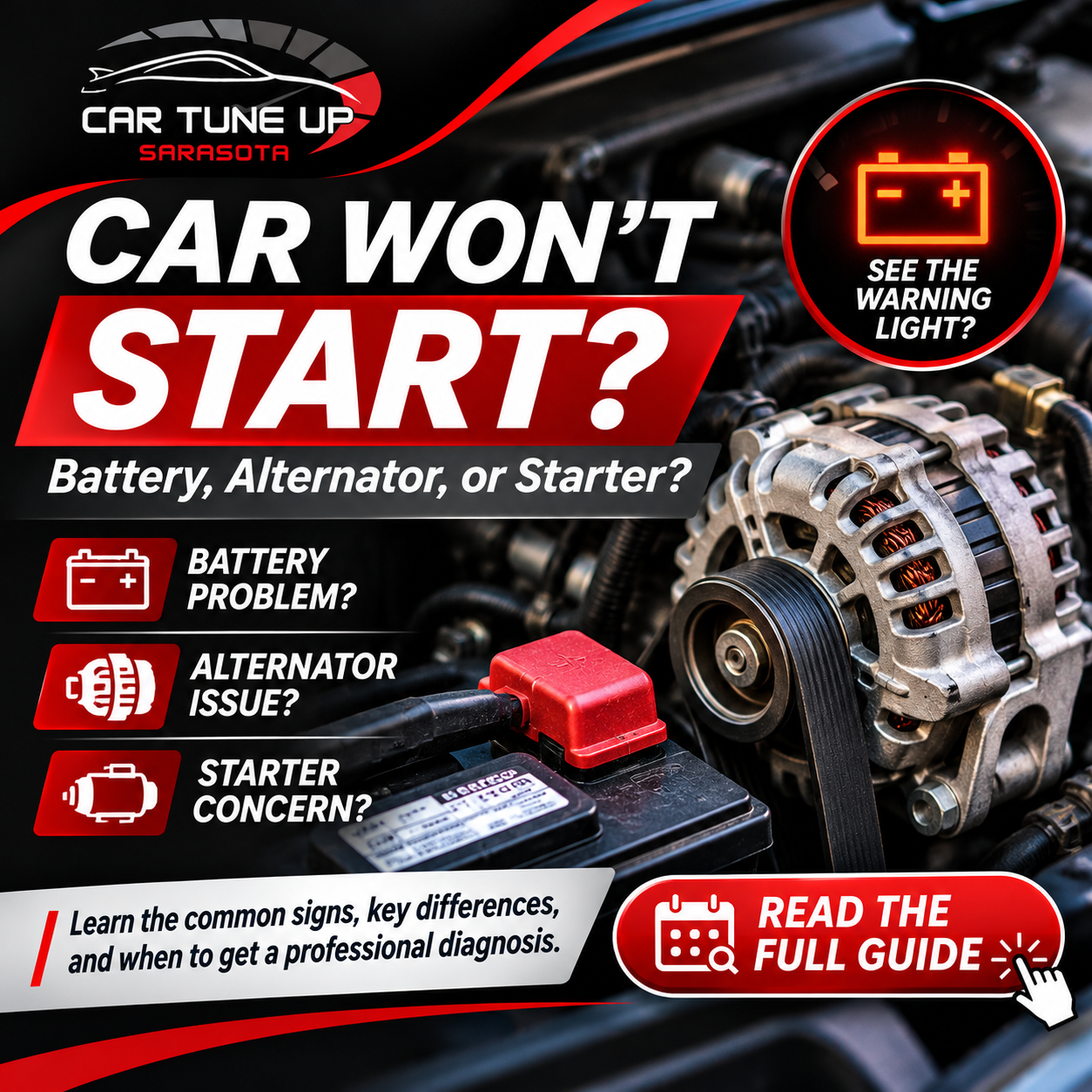
Car Won't Start After Sitting for Months? A Sarasota Snowbird's Guide
Returning to Sarasota for winter? Learn why cars won't start after sitting for months, what to check, and when to schedule battery and electrical testing.

Car Won't Start After Sitting for Months? A Sarasota Snowbird's Guide
Returning to Sarasota for the winter? Learn why vehicles develop starting problems after months of inactivity, what you can safely check, and how professional testing can help prevent unnecessary repairs.
For many seasonal residents, returning to Sarasota means sunshine, warmer weather, and getting back into a familiar routine.
But what happens when you get into your car after several months away, turn the key, and nothing happens?
A vehicle that has been sitting unused for weeks or months can develop battery, starting, and electrical problems. Florida's heat can make some of these problems worse.
At Car Tune Up Sarasota, we help drivers identify the cause of starting problems before recommending repairs.
Why Won't My Car Start After Sitting for Months?
Even when a vehicle is turned off, certain electrical systems continue drawing small amounts of power from the battery.
These may include:
- Security and alarm systems
- Keyless entry receivers
- Vehicle computers and memory systems
- Connected vehicle and telematics equipment
This normal electrical draw, combined with a battery's natural self-discharge, can gradually reduce its charge.
If the vehicle sits long enough, the battery may no longer have enough power to start the engine.
However, a discharged battery is not always a defective battery.
That distinction matters because replacing a battery without identifying the underlying problem may not prevent another breakdown.
1. A Dead or Discharged Car Battery
One of the most common reasons a vehicle will not start after prolonged storage is insufficient battery charge.
Warning signs include:
- Slow engine cranking
- Rapid clicking when attempting to start
- Dim dashboard lights
- Electrical accessories that do not operate normally
- A vehicle that starts with a jump but struggles again later
A battery can lose charge during storage without necessarily needing replacement.
A proper evaluation should determine whether the battery can be recharged and whether it still has adequate capacity to start the vehicle reliably.
How Long Can a Car Battery Sit Without Being Driven?
There is no single answer.
Battery condition, age, temperature, electrical draw, and the vehicle's design all affect how long a battery can remain unused.
Some vehicles may develop starting problems after only a few weeks, while others can remain parked considerably longer.
Modern vehicles with numerous electronic systems may be particularly sensitive to extended periods of inactivity.
2. Florida Heat Can Shorten Battery Life
Many Sarasota residents associate battery problems with cold weather.
However, Florida's high temperatures can also damage automotive batteries.
Excessive heat accelerates chemical reactions inside the battery, contributing to internal deterioration, water loss in applicable battery designs, and reduced service life.
A battery weakened by summer heat may appear to function normally until the vehicle sits unused or faces a greater electrical demand.
For seasonal residents, this creates a common situation:
A vehicle operates normally before departure, sits through several months of Florida heat, and fails to start when the owner returns.
A battery that worked before you left is not guaranteed to work when you return.
3. Could It Be the Alternator Instead?
The alternator helps supply electrical power and recharge the battery while the engine is running.
A malfunctioning charging system can leave a battery undercharged even when the battery itself is still serviceable.
Possible warning signs include:
- A battery or charging-system warning light
- Headlights that dim or fluctuate
- Repeated battery discharge
- Electrical accessories behaving unexpectedly
- An engine that stalls because of insufficient electrical power
An alternator generally does not recharge a battery while the vehicle is parked with the engine off.
Therefore, a battery that becomes discharged during storage does not automatically indicate an alternator problem.
Battery testing and charging-system testing help distinguish these conditions.
4. What If the Battery Is Good but the Car Still Won't Start?
Not every starting problem is caused by the battery or alternator.
Other possibilities include:
Starter Motor Problems
A failing starter or starter-control circuit may prevent the engine from cranking even when the battery has sufficient power.
Corroded or Loose Electrical Connections
Poor battery-terminal connections, damaged cables, or grounding problems can interfere with the electrical current required to start the engine.
Fuel System Problems
Fuel delivery problems may prevent an engine from starting even when the starter turns the engine normally.
Other Electrical or Mechanical Problems
Relays, wiring, sensors, ignition components, and mechanical faults can also contribute to a no-start condition.
This is why an accurate diagnosis should begin with the symptoms and appropriate testing rather than automatically replacing parts.
5. What Should Snowbirds Check When Returning to Sarasota?
Before putting a vehicle back into regular service, consider these basic checks.
Battery and starting system: Watch for slow cranking, warning lights, or unusual electrical behavior.
Tires: Check inflation pressure and look for visible damage or deterioration.
Engine oil and other fluids: Verify appropriate fluid levels and investigate evidence of leaks.
Brakes: Pay attention to abnormal noises, vibration, dragging, or changes in braking performance.
Under the hood: Look for visible signs of rodent activity, damaged wiring, or fluid leaks.
Maintenance history: Review whether any time-based maintenance became due while the vehicle was stored.
If the vehicle starts normally, that is encouraging, but it does not guarantee every system is operating properly.
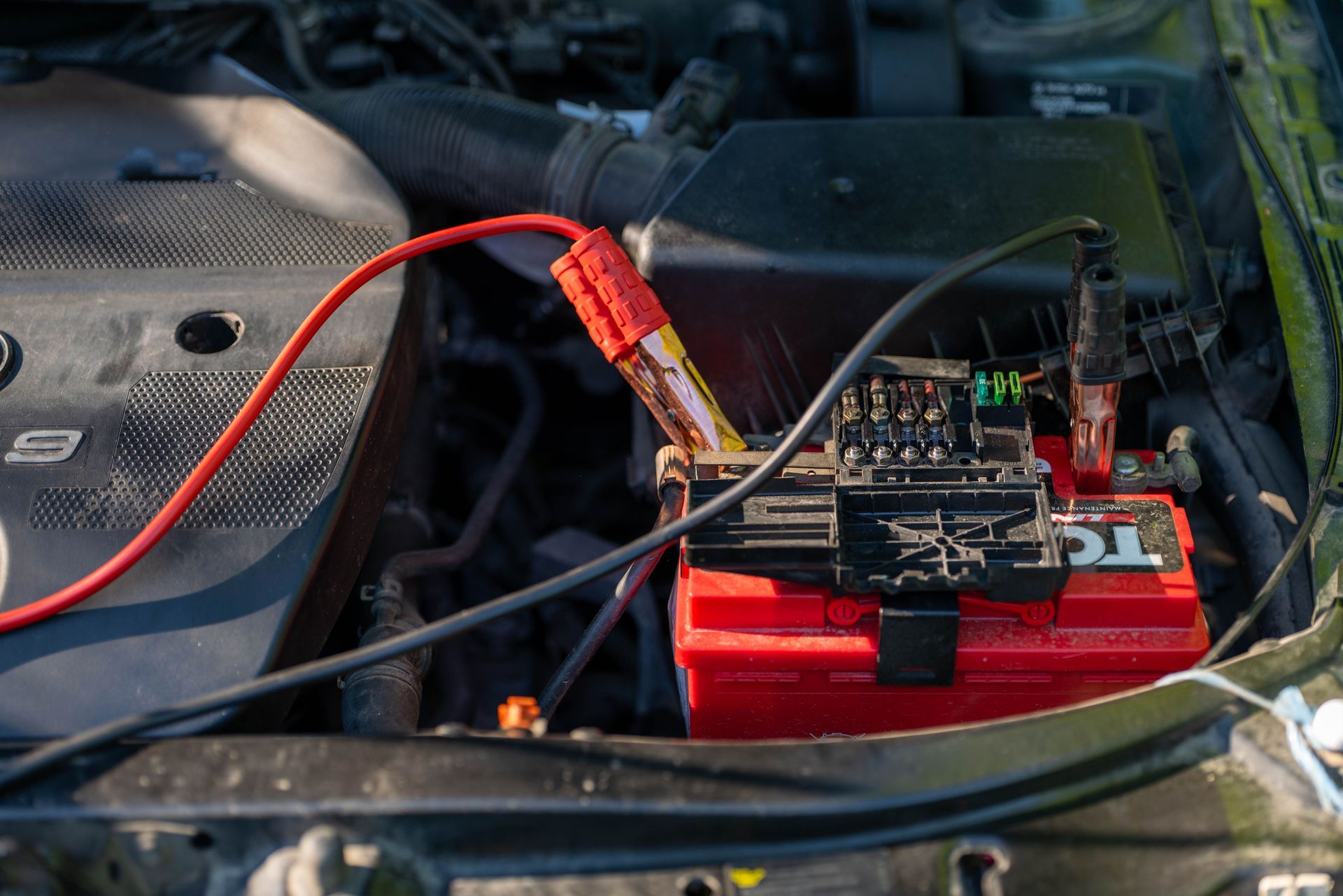
6. Should You Jump-Start a Car That Has Been Sitting?
Jump-starting may allow a vehicle with a discharged battery to start, but it does not identify why the battery lost its charge.
Before attempting a jump-start, consult the vehicle owner's manual for the correct procedure and connection points.
Do not attempt to jump-start a battery that is visibly damaged, leaking, frozen, or otherwise unsafe.
If the vehicle starts after a jump, additional testing may still be needed.
A short drive does not guarantee that a deeply discharged battery has been fully recharged.
Repeatedly jump-starting a vehicle without determining the cause can leave you stranded again.
7. When Is Professional Battery and Electrical Testing Necessary?
Professional testing is particularly useful when:
- Your vehicle has been parked for several months
- The engine cranks slowly
- The battery repeatedly loses its charge
- You recently replaced the battery but still experience problems
- A charging-system warning light appears
- The vehicle starts intermittently
- You suspect an electrical drain while the vehicle is parked
Depending on the symptoms, testing may include battery condition, starting-system operation, charging-system output, electrical connections, and parasitic current draw.
The goal is to identify the actual failure before recommending replacement parts.
8. Preventing Battery Problems During Your Next Extended Absence
If you leave your vehicle in Sarasota for several months each year, planning ahead may reduce the likelihood of returning to a dead battery.
Consider the following precautions:
- Have an aging or questionable battery evaluated before departure.
- Follow the vehicle manufacturer's storage recommendations.
- Consider an appropriate battery maintainer when a suitable power source is available.
- Check that the charging or maintenance equipment is compatible with your battery and vehicle.
- Address known electrical problems before leaving.
- Review tire pressures and other storage-related maintenance needs.
A properly selected battery maintainer may help maintain charge during extended storage, but it cannot repair an internally damaged battery or correct every electrical fault.
Frequently Asked Questions
Can a car battery die from sitting for three months?
Yes. Normal electrical draw, self-discharge, battery age, and environmental conditions can cause a battery to become discharged during several months of storage.
Does a dead battery always need replacement?
No. Some discharged batteries can be recharged and continue providing reliable service. Others have deteriorated and require replacement. Testing helps determine the difference.
Can Florida heat damage a car battery?
Yes. High temperatures can accelerate battery deterioration and shorten its useful life.
Will driving recharge a battery after months of storage?
Driving may replenish some battery charge if the charging system is working properly, but it may not fully recharge a deeply discharged battery. An appropriate external charger may be needed.
Can an alternator cause a car not to start?
Yes. A charging-system failure can leave the battery too discharged to start the vehicle. However, an alternator is not necessarily defective simply because a parked vehicle has a dead battery.
Where can I get battery and electrical diagnostics in Sarasota?
Car Tune Up Sarasota provides automotive diagnostic services to help identify starting, battery, and electrical problems.
Returning to Sarasota? Make Sure Your Vehicle Is Ready.
A car that has been sitting for months deserves more than a guess when it refuses to start.
Whether the cause is a discharged battery, charging-system problem, faulty connection, or another issue, identifying the problem correctly can help avoid unnecessary repairs.
At Car Tune Up Sarasota, our approach is simple: test, explain the findings, and recommend the repairs your vehicle actually needs.
Car Tune Up Sarasota
2420 Stickney Point Rd.
Sarasota, FL 34231
941-922-2998 — Ask for Gordon
Visit our website to learn more about our services:
https://cartuneup-sarasota.com/
Don't wait until your vehicle leaves you stranded. Contact Car Tune Up Sarasota to discuss your starting or electrical problem.